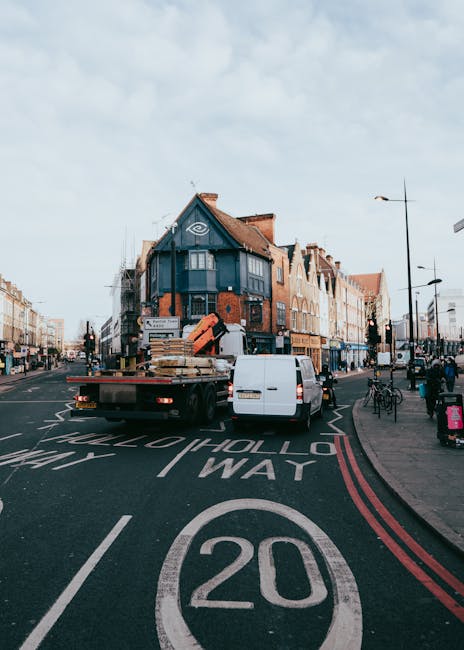
Southwark parking suspensions guide for Peckham removals

If you are moving in or out of Peckham, parking can become the difference between a calm move and a very long morning with hazard lights on. This Southwark parking suspensions guide for Peckham removals explains how to plan for kerb space, what a parking suspension is, how movers usually handle it, and where the common headaches appear. It is written for real-world moving days: flat blocks, tight Victorian streets, busy side roads, and that familiar London feeling of there's nowhere to stop for even a minute.
The goal is simple. Help you protect access for the van, avoid unnecessary delays, and make sure your removals team can work safely and efficiently. Along the way, you will find practical steps, a comparison table, a checklist, and a few honest tips that people often wish they had heard earlier. To be fair, parking arrangements are rarely exciting. But on moving day, they matter a lot.
Why Southwark parking suspensions matter for Peckham removals
Peckham is busy, layered, and not especially forgiving if a removal van arrives without a plan. Streets can be narrow, parking bays can be full, and even a short unload can turn awkward if the vehicle blocks traffic or sits where loading is not permitted. A parking suspension is usually the cleanest way to reserve a section of road or bay for a defined period so a van can park legally and close to the property.
Why does that matter so much? Because every extra metre between the van and the front door adds time, effort, and risk. You end up with heavier lifting, more chances of bumping walls or bannisters, and a move that feels stretched out. If you are dealing with stairs, awkward sofas, or a narrow entrance, the difference between an easy unload and a stressful one can be surprisingly small.
In Southwark, parking arrangements matter for all kinds of moves, not just large house removals. A one-bedroom flat, a shared house, a student move, or a small office relocation can all run better with planned access. It is one of those things people often leave too late. Then the morning arrives, the van circles the block, and everyone gets a bit tense.
That is the core reason this guide exists: not to make parking sound glamorous, but to help you avoid the avoidable.
How Southwark parking suspensions guide for Peckham removals works
At a practical level, a parking suspension temporarily changes how a road space, bay, or loading area can be used. For a Peckham removal, the aim is usually to create a safe stopping place near the address so the moving team can load or unload efficiently. In plain English, it is a way of saying: this spot needs to be kept clear for the move.
What happens next depends on the local process and the timing of your move. In many cases, the request has to be made in advance and may involve details such as the property address, date, estimated duration, and vehicle size. That is normal. It helps the parking arrangement match the actual move rather than becoming a vague promise that does not quite fit on the day.
For removals, the most useful suspension is the one that is realistic. Too short and it creates pressure. Too broad and it can be more complicated than necessary. The sweet spot is a reserved space that gives the van room to park without forcing the team into a rushed load. If you are using man and van support or a larger vehicle such as a moving truck, the size of the vehicle should shape the plan.
A useful way to think about it is this:
- No suspension: cheapest on paper, but often risky in busy Peckham streets.
- Suspension only: better access and less chance of circling for parking.
- Suspension plus careful timing: best for tighter streets, flats, and heavier items.
That last point matters. The best parking plan is not just about a space. It is about when the van arrives, how long the team needs, and whether lifts, stairs, or building access will slow things down.
Key benefits and practical advantages
Parking suspensions are not just a bureaucratic box to tick. Used properly, they make the move more controlled and less physically draining. You will notice the difference almost immediately if the van can stop close to the entrance.
Here are the main benefits:
- Shorter carrying distance: fewer trips and less fatigue for everyone involved.
- Less chance of parking fines or obstruction issues: which is a relief on an already busy day.
- More predictable timing: your removals crew can work to a clearer schedule.
- Improved safety: fewer long carries through traffic or around awkward corners.
- Better protection for furniture: the less time items spend outside, the less exposure to knocks, rain, and scrapes.
There is also a quieter benefit that people sometimes overlook: morale. A move feels more manageable when the logistics are under control. Everyone's less flustered. The kettle gets unpacked sooner. The whole thing has a better rhythm, even if there is still a box of cables nobody wants to deal with yet.
If you are arranging broader removal help, it is worth looking at the wider move package too. Services like removal services, flat removals, and home moves can be planned around the parking arrangement so the arrival window, vehicle type, and carry time all work together.
Who this is for and when it makes sense
This guide is especially useful if you are moving in Peckham and the nearest parking is rarely straightforward. That includes people moving from upper-floor flats, terraced houses, maisonettes, or properties on roads where curb space disappears fast. It also helps if you are moving on a weekend, during school run times, or at a time of day when the street is naturally busier.
You should seriously consider a parking suspension if:
- the property is on a narrow residential road;
- the move involves heavy furniture or a piano;
- you expect repeated loading and unloading trips;
- the van will need to remain close to the address for some time;
- the building access is awkward or there is no rear entrance;
- you want to reduce the chance of delays caused by hunting for a legal parking space.
It also makes sense for commercial moves. Offices are often under time pressure, with lifts, reception desks, IT equipment, and multiple people trying to work around the same schedule. For those situations, a reserved stopping point can be a real sanity-saver. A good example is a small business relocating a few desks and archive boxes from a Peckham office into another Southwark location. The actual move may be modest, but the parking headaches can still be surprisingly large.
If you are moving a student room, the case is a bit different. A suspension may still help, but the need depends on how much you are moving, whether the property has outside access, and whether a small vehicle can stop legally nearby. For some moves, student removals are straightforward without special parking arrangements. For others, not so much.
Step-by-step guidance
If you want the process to feel less chaotic, work through it in order. That sounds obvious, but moving day has a habit of making obvious things disappear.
- Assess the street first. Look at where a van could reasonably stop, whether there are bays, yellow lines, or a clear loading area, and whether the space is actually usable for a larger vehicle.
- Match the parking plan to the property. A top-floor flat, a house with long stairs, or a bulky furniture move may need more access than a simple box-only move.
- Choose the right moving support. If you are using man with van support, the parking needs may differ from a larger team with a removal van or a hired removal truck hire option.
- Build in time for the unexpected. Even well-planned moves can be slowed by lifts, access codes, traffic, or someone parking a little too confidently in the only useful bay.
- Confirm the move-day plan in writing. Keep a note of the date, address, vehicle size, and timing so everyone is aligned.
- Prepare the property. Clear hallways, protect floors if needed, and make sure the route from the door to the van is safe and as direct as possible.
- Keep contact details handy. If access changes, the driver or removals team should be able to reach you quickly.
A tiny but important detail: check whether the van will be there for loading only or whether it needs to stay put during the whole job. That affects how much space you really need. Easy to miss. Very easy.
Expert tips for better results
In our experience, the best moving days are the ones where the logistics are boring. No drama, no circling the block, no half-finished plan. Here are a few ways to get closer to that ideal.
- Choose the clearest access point, not just the closest one. Sometimes the best spot is a few metres further away if it avoids awkward manoeuvring.
- Think in carrying time, not just distance. A short distance over steps or through a shared corridor can take longer than a slightly longer flat route.
- Keep bulky items together. If the van is already reserved and ready, you avoid wasting the parking window while searching for the next box of odds and ends.
- Use packing discipline. Good labels, sturdy boxes, and grouped items speed up loading. If the team can work faster, the parking requirement may be easier to manage.
- Plan around weather. Peckham rain has a way of turning a tidy move into a damp one. Not ideal. A suspension helps keep things moving quickly.
- Consider storage if timing is messy. If completion dates, keys, or access windows do not line up neatly, storage can reduce pressure and give you breathing room.
Here is the bit people sometimes skip: if your move includes special items, tell the removals team early. A piano, for example, changes both handling and timing. So does a large wardrobe that has to be broken down and rebuilt. For more complex jobs, piano removals and careful furniture handling can be combined with the parking plan so the whole thing fits together properly.
And yes, a little prep saves a lot of muttering under breath. That counts too.
Common mistakes to avoid
Most parking problems on moving day are not dramatic failures. They are small oversights that pile up. The good news? They are usually avoidable.
- Leaving parking arrangements too late. If you wait until the week of the move, your options may be limited.
- Assuming any space will do. A legal parking spot is not always a practical loading spot.
- Forgetting about vehicle size. A van that is fine for a studio flat may not suit a larger family move.
- Not allowing for shared access. If neighbours, visitors, or other road users need space too, your plan may need more thought.
- Ignoring stair-heavy access. A short road distance can still become a long unloading process if the lift is out or the flat is on the third floor.
- Mixing packing and parking delays. If the boxes are not ready when the van arrives, your reserved space is being burned away by the minute.
A funny thing about moving day is how one small delay can become the story everyone remembers. Not the sofa. Not the new place. The parking. So the safest move is to treat access as part of the move itself, not a separate admin task.
Tools, resources and recommendations
You do not need a massive toolkit to organise parking well. What you need is a tidy bit of information, a clear plan, and the right service pages to support the move. Start with the basics.
- A written move plan: date, address, access notes, and estimated load time.
- Photographs of the street or frontage: useful if you need to show the shape of the space or explain awkward access.
- Measurements for larger items: wardrobes, beds, sofas, and anything that might slow loading.
- A packing plan: if boxes are ready first, the van time is used more efficiently.
For a smoother wider move, it can help to combine parking planning with related services such as packing and boxes or packing and unpacking services. That way, access and handling are treated as one moving system rather than separate chores you are trying to juggle on the fly.
If the move is more business-focused, office removals and office relocation services often benefit from especially careful timing, because staff, equipment, and building access all need to be managed together. For shops, studios, or other business premises, commercial moves can be a better fit than a purely residential approach.
If you want a sense of the company behind the service, the about us page is useful for understanding the team's approach, while the insurance and safety page helps reassure you that the move is being handled with proper care.
Law, compliance, standards and best practice
Parking suspensions sit within a broader framework of local parking control and road use rules. The exact process can vary by street and by council procedure, so it is wise to treat any specific requirement carefully and verify it before move day. The safest general rule is simple: do not assume that a space is available just because it looks empty.
Best practice usually means:
- making arrangements early enough to avoid last-minute pressure;
- using accurate property and vehicle details;
- keeping the loading area clear for the intended period only;
- avoiding obstruction of pedestrians, emergency access, or neighbouring properties;
- following the practical guidance given by the removals team and any relevant local instructions.
From a moving company perspective, safety and care matter as much as convenience. That includes safe lifting, protecting property, and taking sensible steps to reduce strain and avoid damage. If you are comparing providers, it is worth looking at whether they have clear policies around health and safety, terms and conditions, and payment and security. Those pages may not be thrilling reading, but they tell you a lot about how organised a business is.
There is also a sustainability angle. A well-planned move with fewer failed parking attempts can reduce wasted driving around the block, which is better for time and, frankly, better for everyone's nerves. If that matters to you, the company's recycling and sustainability approach is worth a look, especially if you are discarding packaging or unwanted items.
Options and comparison table
Here is a simple way to compare common access approaches for Peckham removals. The right choice depends on the street, the size of the move, and how much time you have.
| Approach | Best for | Advantages | Drawbacks |
|---|---|---|---|
| No reserved space | Very small moves or flexible timings | Simple, no extra arrangement needed | Higher risk of delays and long carries |
| Parking suspension | Most Peckham removals in busy streets | Controlled access, safer loading, less disruption | Needs planning and advance organisation |
| Smaller vehicle approach | Light loads or student moves | Easier to fit into tighter spaces | May require more trips or careful packing |
| Storage-first move | Delayed completions or staggered handovers | Reduces time pressure and split-access stress | Extra handling and coordination |
For many households, the best answer is not one method alone but a combination. For example, a flat move may work best with a reserved space, efficient packing, and a smaller van if access is tight. A house move with more furniture may benefit from a bigger vehicle and a more generous loading window. Different job, different shape.
Case study or real-world example
Picture a two-bedroom flat near a busy Peckham road on a Friday morning. The residents are moving out with sofas, a dining table, six large boxes, and the usual scatter of oddly shaped things that never fit anywhere neatly. The street is already busy, and there are only a few possible stopping points. Without a planned parking arrangement, the van might need to circle several times before finding a legal place far from the entrance.
Now compare that with a move where the parking is thought through early. The removals team arrives at the agreed time, stops as close as possible to the property, and starts loading in a direct line from the front door. The heaviest items go first. Fragile boxes are kept apart. The residents are not standing around wondering where the van has gone. The whole thing feels steadier, almost dull in the best possible way.
That is exactly what you want from a move. Not excitement. Not improvisation. Just a sensible, quiet run through the day. In this kind of situation, a parking suspension is less about paperwork and more about protecting the rhythm of the job.
If the property also needs extra handling support, a service such as house removals or house removalists can help keep the move structured, while specialised services like furniture removals or furniture pick up can take pressure off the main van load.
Practical checklist
Use this before move day. It is simple, but it catches the things people forget when they are busy packing cutlery into a box labelled "misc."
- Confirm the moving date and estimated arrival time.
- Check whether the street has enough legal stopping space for the vehicle.
- Decide whether a parking suspension is needed.
- Match the vehicle size to the amount of furniture and boxes.
- Tell the removals team about stairs, lifts, narrow hallways, or access codes.
- Pack and label boxes before the van arrives.
- Measure large items that might need dismantling.
- Keep a phone charged and nearby on the day.
- Prepare keys, paperwork, and building entry details in one place.
- Set aside essentials you do not want buried in the first load.
- Check whether storage may be needed if dates do not line up neatly.
If you want a more guided approach, it can help to combine this checklist with the company's wider removal support, especially if you are comparing removals, removal companies, or a straightforward man with van booking.
Get a free quote today and see how much you can save.
Conclusion
A good moving day in Peckham usually comes down to preparation, and parking is one of the biggest parts of that preparation. If you plan access properly, you give yourself a better chance of a calm, efficient move. If you leave it until the last moment, the whole day can feel harder than it needs to be.
The smart approach is straightforward: assess the street, choose the right vehicle, think about carrying distance, and make sure the loading space works for the actual job. That may sound unglamorous, but it is the sort of thinking that saves time, effort, and stress. And let's face it, moving already has enough drama without adding parking into the mix.
When in doubt, keep it practical, keep it early, and keep it simple. That is usually how the best moves happen.
Frequently Asked Questions
Do I always need a parking suspension for a Peckham removal?
No, not always. Small moves, flexible timings, or streets with easier access may work without one. But in busy Peckham roads, a suspension often makes the move smoother and less stressful.
How far in advance should I think about parking arrangements?
As early as you can. Parking is one of those details that seems minor until move day arrives. Leaving it late can limit your options and create avoidable pressure.
What if the street looks empty on the day of the move?
That can still be risky. A space that looks empty may not be legal for loading, or it may be needed by residents, visitors, or traffic flow. Always plan around what is permitted, not just what is visible.
Is a parking suspension useful for flat removals?
Yes, especially for upper-floor flats, narrow roads, or buildings with limited outside space. It can cut down the carrying distance and help the crew work more safely.
Can a small man and van job benefit from a reserved space?
Absolutely. Even smaller jobs can be delayed if parking is hard to find. A reserved stop can be very helpful when the road is busy or the property access is tight.
What should I tell the removals team before moving day?
Tell them the exact address, access details, the approximate amount of furniture, any heavy or delicate items, and whether parking near the property is likely to be difficult.
Do storage and parking planning ever go together?
Yes. If keys, completion times, or handover dates do not align, storage can reduce the pressure and make the parking side of the move easier to manage.
Are parking suspensions only for house moves?
No. They can help with office relocations, commercial moves, student moves, and specialist items too. The question is less about the property type and more about access.
What are the biggest mistakes people make with moving-day parking?
The most common ones are leaving it too late, choosing the wrong vehicle size, and assuming any available space will be fine. Those are the things that trip people up most often.
How do I know whether my move needs extra planning?
If the street is narrow, parking is scarce, the property is on a higher floor, or you have bulky items, it is worth planning carefully. If you are unsure, it is usually safer to plan for more access rather than less.
Does a parking suspension make the whole move faster?
Usually, yes. Not because it does the lifting for you, but because it reduces wasted time looking for space and shortens the route between the van and the door. That alone can change the whole feel of the day.
Where can I find more information about the company's approach to safety and service?
You can read more on the health and safety policy, insurance and safety, and pricing and quotes pages for a clearer picture of how the service is structured.